This past week I really enjoyed reading the new study, Scaffolding Human–AI Collaboration: A Field Experiment on Behavioral Protocols and Cognitive Reframing from Microsoft.
The gap it highlights is one I recognize immediately. Most organizations already have the tools. The licenses. The training programs. Access isn’t the issue, assuming procurement, security, and legal can keep up.
What the research is catching up to is something I’ve been watching play out in real time: the gap in outcomes isn’t about who has access to the technology. It’s about how people are using it, and more importantly, whether they’re getting better at it.
The individuals who consistently get the most out of AI treat it like a skill they’re developing, not a tool they’re occasionally using. They come back to the same problem. They refine. They iterate. Over time, it compounds into something that looks like intuition.
One quote from the research which will stick with me for a while, from Conor Grennan CEO, AI Mindset - Former Chief AI Architect, NYU Stern stated:
When we stop treating AI like a tool and start treating it like a teammate, we unlock its real potential - not just to answer questions, but to expand how we think.
That tracks directly with what I’ve been calling Purpose over Pressure.
When the message to employees is urgency move faster, don’t fall behind, etc. most people engage just enough to say they tried. One or two interactions, minimal depth, no real improvement. The interaction stays shallow because the environment made it shallow. People aren’t underperforming. They’re responding exactly to how the system is designed. But when people understand why AI matters for their work, and feel genuinely expected to grow into it over time, the behavior shifts. They stay longer. They ask better questions. They start to build an actual working relationship with the tool.
That’s where the results start to separate.
What makes this moment particularly different is the pace of change underneath all of it. The tools are moving faster than any training program can track. What you teach in a session this month will look materially different in six weeks. Which means the advantage is no longer tied to knowing how a specific tool works. It shows up in how quickly someone can adapt, re-learn, and apply what they know to a problem they haven’t seen before.
That has real implications for how leaders think about transformation.
The focus can’t stop at rollout and enablement. It has to include how people actually build fluency, and that doesn’t happen in a training session. It happens through repeated use, reflection, and iteration. The people I’ve seen develop real AI intuition aren’t the ones who completed the most learning modules. They’re the ones who used it across real problems, in more places than anyone formally asked them to. The frequency changed something at a deeper level: they started to retain what they learned, recognize patterns faster, and build confidence through experience rather than instruction.
Once that shift happens, the improvement curve looks very different.
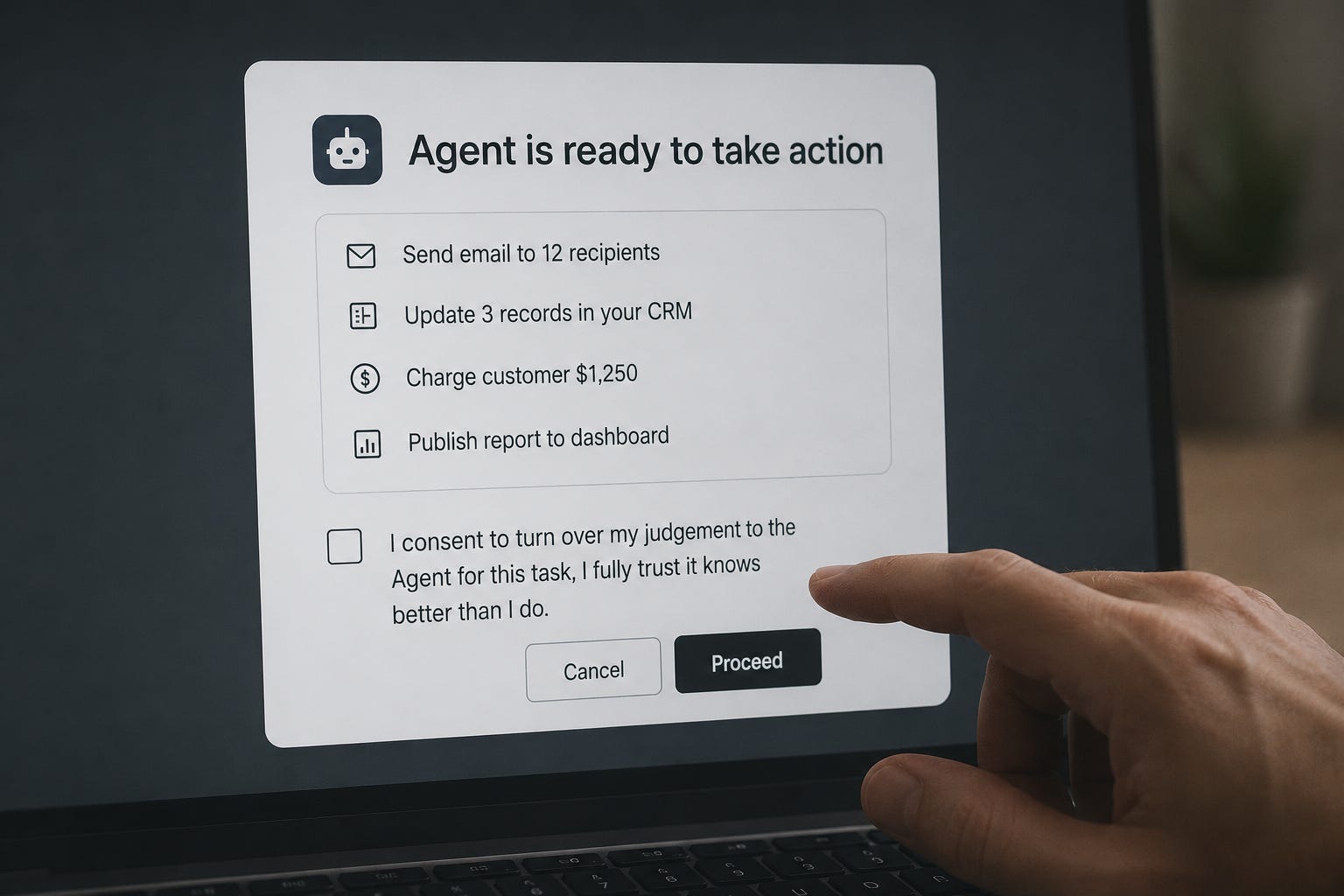
The harder leadership question isn’t how to introduce AI into an organization. It’s how to build an environment where people keep getting better at using it. It comes down to whether the environment you’ve built gives people room to use AI as a thought partner. With caution, sure. But in the past, I’d hear leaders say, “Let’s hire smart people and get out of their way.” With AI, most of the conversation has been about risk trust and security. Much less about where we should actually trust it to do meaningful work.
Because in a space moving this quickly, the organizations that pull ahead won’t be the ones that adopted first. They’ll be the ones that learned faster.
And learning, in this case, isn’t something you can mandate. It’s something you have to design for. Teaching people how and when to use AI as a thought partner, with clear guardrails, will be the differentiator.
Great stuff from Microsoft and Gap. Read more at: https://microsoft.github.io/ai-mindset-experiment/
A field experiment with 388 employees at Gap Inc. testing two interventions in a single day: an AI-first collaborative process and AI Mindset training. Both compared against naturalistic AI use with full Microsoft Copilot access.
AI Summary: This research report details a 2026 field experiment conducted with Gap Inc. employees to evaluate how behavioral and cognitive scaffolding impact human-AI collaboration. The study found that mandating structured protocols for team collaboration actually hindered performance, causing higher friction and lower output quality compared to flexible use. Conversely, cognitive reframing, which taught individuals to view AI as a "thought partner" rather than a tool, was associated with a higher likelihood of producing high-quality work. The authors conclude that mindsets and interaction patterns are more critical to productivity than mere access to technology. However, the results include several caveats, such as time-of-day biases and measurement limitations like ceiling effects in grading. Ultimately, the sources suggest that organizations should focus on shaping mental models before imposing rigid workflows.